
US President Donald Trump has threatened a “tremendous tax” on American companies that build artificial intelligence data centres outside the United States, a proposal that could have consequences for India’s plans to attract global technology infrastructure investment. Trump made the remarks during a White House press briefing on 20 November 2026, after returning from an Asia trip.
The statement was framed as part of the US effort to compete with China in artificial intelligence. However, the administration has not announced a formal policy or implementation plan. Trump did not identify the proposed tax rate, the companies that could be covered or the date on which any measure would take effect.
“We’re not going to allow our companies to build data centers outside of our country. We’re not going to allow that to happen.” — US President Donald Trump
What the proposal could mean for India
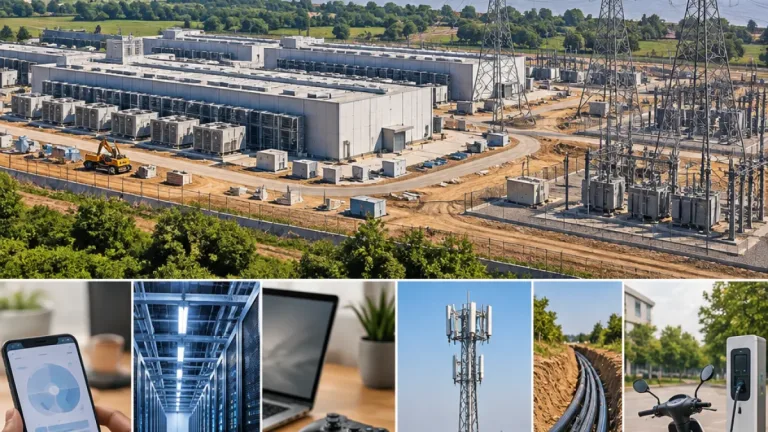
India is seeking to expand its computing infrastructure as demand grows for cloud services, digital platforms and AI applications. Data centres provide the storage and processing capacity used by businesses, government departments and technology companies. A tax aimed at US companies that establish such facilities overseas could therefore affect the commercial calculations behind projects in India, although the impact cannot be assessed until the US sets out the details.
According to figures from the Ministry of Electronics and Information Technology (MeitY), India’s installed data centre capacity rose from 375 megawatts in 2020 to around 1,575 MW in 2026. MeitY identified the following locations as established or emerging centres in a response submitted to the Lok Sabha on 5 August 2026:
| Category | Locations |
|---|---|
| Key data centre locations | Mumbai, Navi Mumbai, Chennai, Hyderabad, Bengaluru, Delhi-NCR and Gujarat |
| Emerging destinations | Andhra Pradesh, Madhya Pradesh, Chhattisgarh and West Bengal |
Investment decisions remain company-led
MeitY said private companies decide where to establish data centres based on factors including demand, operating costs, power availability, access to skilled workers and long-term business viability. The ministry also said the government does not provide subsidies for setting up these facilities.
That framework means the proposed US measure would interact with decisions already shaped by electricity, land, connectivity, workforce and customer requirements. American technology companies may have to weigh the cost of a possible overseas tax against the operational and market advantages of locating infrastructure in India. At present, the lack of a tax rate or implementation timetable makes the proposal a political statement rather than an enforceable rule.
- India’s installed data centre capacity: around 1,575 MW in 2026, up from 375 MW in 2020.
- US proposal: a threatened “tremendous tax” on American companies building data centres abroad.
- Status: no formal policy, tax rate, list of affected companies or effective date has been announced.
For India, the immediate issue is uncertainty around future overseas investment in AI infrastructure. The country’s data centre expansion is continuing, but projects involving US companies could face a different cost assessment if Washington turns the threat into a detailed tax measure. Until that happens, the effect on India’s AI computing plans remains unclear.