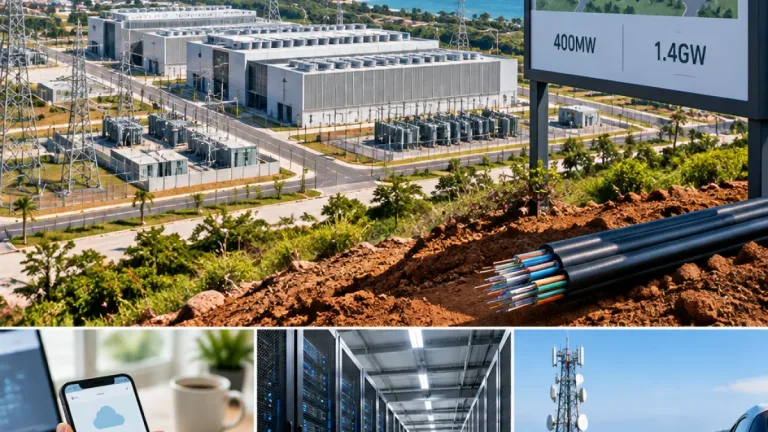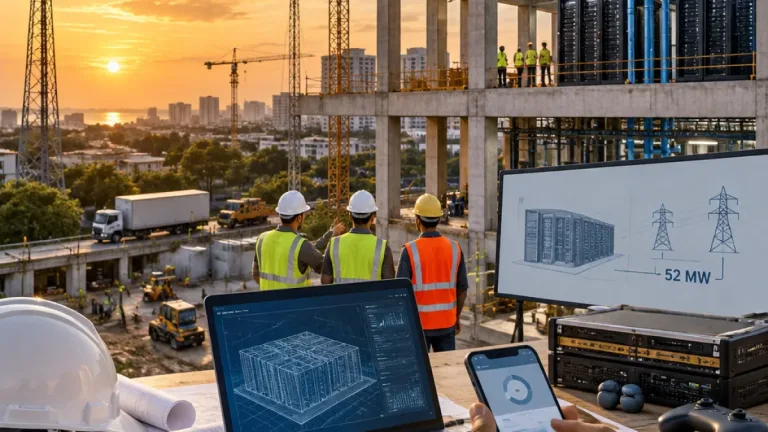
India’s rapid expansion of data-centre capacity is expected to create a substantial requirement for specialised warehousing and industrial facilities, according to Savills India Research. The demand will support the construction, installation and operation of data centres, rather than coming from conventional retail or general logistics activity.
Savills estimates that India’s operator-based data-centre stock could rise to more than 7 GW of IT capacity by 2030. As facilities are built and brought online, warehouses located close to data-centre clusters will be needed to store and stage critical equipment, distribute components and support maintenance and replacement work during the operational life of these sites.
How data centres could drive warehousing demand
The research estimates that each 1 MW of data-centre IT capacity typically generates a requirement for around 6,000–7,000 sq ft of aligned warehousing space. Applying that ratio to the addition of more than 5 GW of new capacity by 2030 results in an estimated 30–35 million sq ft of warehousing demand across India.
| Measure | Savills India estimate |
|---|---|
| Projected operator-based data-centre stock by 2030 | More than 7 GW IT |
| New data-centre capacity considered | More than 5 GW IT |
| Warehousing linked to 1 MW of IT capacity | 6,000–7,000 sq ft |
| Potential aligned warehousing demand by 2030 | 30–35 million sq ft |
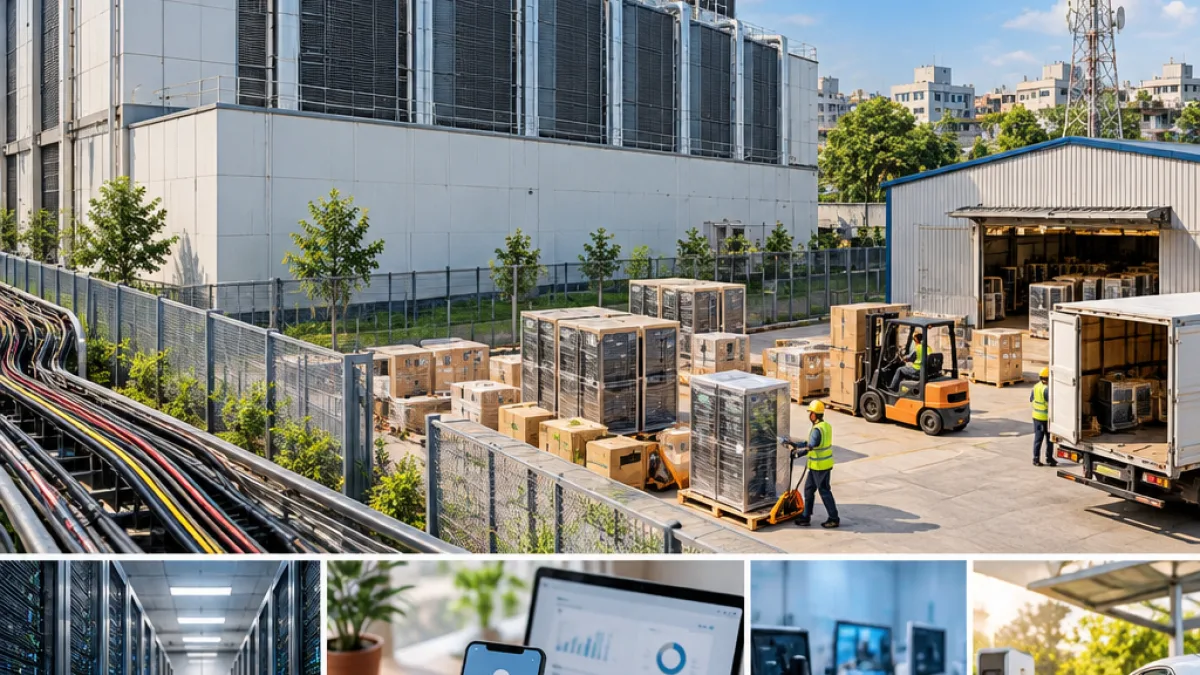
Unlike warehousing serving broad consumer or manufacturing networks, this requirement is likely to be concentrated around major data-centre locations. Such facilities would support equipment storage and staging during construction, followed by the storage of replacement parts and other materials needed for ongoing operations. Their proximity to data-centre campuses could therefore be an important factor in the reliability of installation and maintenance activity.
“India’s data centre expansion is creating a new demand opportunity for the industrial and logistics real estate sector. Beyond the data centre campuses, the supporting ecosystem will require strategically located warehousing for equipment storage, installation and ongoing operations. Equally significant is the potential to accelerate domestic manufacturing of critical equipment and components, driving demand for industrial land and specialised facilities. This convergence of digital infrastructure, manufacturing and logistics will be an important growth driver for India’s industrial real estate market,” said Srinivas N, MD, industrial and logistics, Savills India.
Why the requirement is increasing
Savills links the projected growth to rising digitalisation, enterprise cloud adoption, artificial intelligence workloads, favourable policy initiatives and increasing data consumption. These factors are raising demand for computing capacity and, in turn, for the physical infrastructure required to house, connect, install and maintain the equipment behind digital services.
The expected demand also points to a wider industrial impact from India’s data-centre buildout. Alongside warehouse space, the expansion could increase demand for industrial land and specialised facilities used to manufacture critical equipment and components. The opportunity is therefore not limited to data-centre campuses: it extends to logistics providers, industrial developers and manufacturers supporting the wider digital infrastructure ecosystem.
- India’s operator-based data-centre stock could exceed 7 GW IT by 2030.
- More than 5 GW IT of new capacity could generate 30–35 million sq ft of aligned warehousing demand.
- The requirement will cover equipment storage, staging, installation, maintenance and replacement activity.
For technology users in India, the projection reflects the physical expansion required to support cloud services, AI workloads and growing data consumption. The estimate concerns industrial and logistics infrastructure rather than a consumer-facing data-centre service, but it shows how the country’s digital growth is creating demand across sectors beyond computing and connectivity.