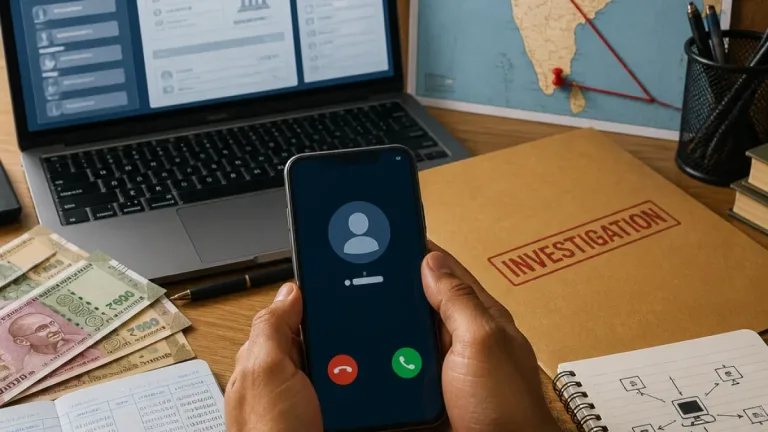
The North District Police in Delhi have arrested seven people in connection with an alleged cyberfraud network that investigators say moved more than ₹30 crore through a web of bank accounts used to launder proceeds from online scams. The case was opened after a college student reported losing small sums to a fraudulent Instagram listing, a complaint that led officers to uncover dozens of linked incidents across states.
How a small complaint exposed a wider racket
According to police, the investigation began when a student of Ramjas College reported being cheated of payments made after responding to an Instagram advertisement for a kurti. The complainant was directed to a WhatsApp number, paid an advance of ₹400 to place a ₹799 order via a QR code and later made additional payments after being pressured to share a delivery passcode. No parcel was ever delivered and refunds were not issued. The FIR was registered at Cyber Police Station, North District, on 4 September.
Technical tracing and coordinated raids
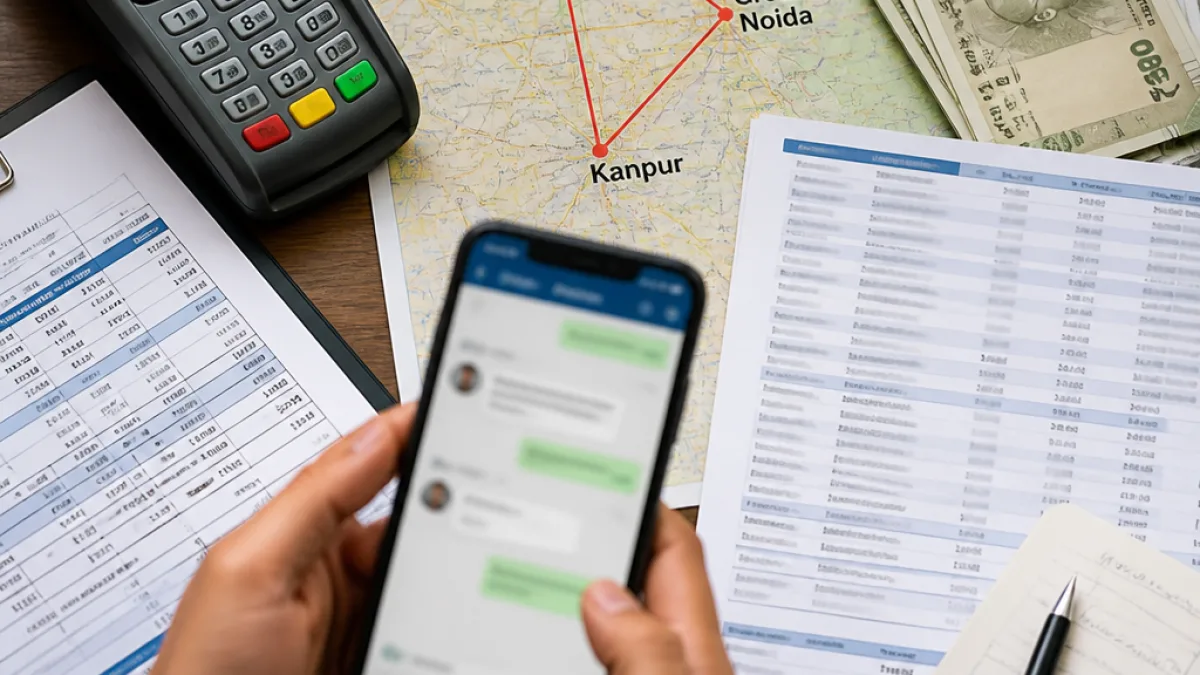
Investigators performed technical surveillance and analysed nearly 200 mobile numbers and IMEI details, along with banking transactions and digital records obtained from platforms including Flipkart, Zomato and Blue Dart. Police say they traced the cheated amounts from a Pine Labs merchant account to a Canara Bank account registered to Kizentech Solutions Pvt. Ltd., based in Greater Noida.
- Coordinated raids in Greater Noida on 16 October produced six arrests: Aditya Mishra, Ayush Verma, Abhishek Pal, Himanshu Rana, Rahul Kumar and Gaurav Pandey.
- A further arrest, of Udit Pratap Singh Bhadauriya, was made in Kanpur on 21 October.
- Police say about 25 bank accounts were allegedly used to route fraud proceeds and that 27 cyber fraud complaints from multiple states have been linked to the same network.
Alleged modus operandi and corporate fronts
The North District Police allege the accused established firms and opened current accounts using documents in the names of fictitious entities and individuals to supply bank accounts to cybercriminals. These accounts were then used to collect payments from victims who believed they were transacting with legitimate sellers or service providers.
The investigation highlights how common social platforms and messaging applications can be exploited to direct victims to payment channels—QR codes, merchant portals and bank transfers—whose funds are rapidly moved through third‑party accounts. Police officers involved in the probe emphasised the multi‑jurisdictional nature of such operations and the need to trace both transaction flows and digital identifiers to dismantle networks.
What this means for users and payment platforms
The case draws attention to the role of merchant acquirers and current accounts in the mechanics of digital fraud. While police named a Pine Labs merchant account and a Canara Bank account of Kizentech Solutions Pvt. Ltd. as links in the flow of funds, they did not allege compromise of the payment terminals themselves. The authorities continue to investigate whether additional corporate or service providers were used to facilitate transfers.
Consumers are reminded to verify sellers and to be cautious when redirected from social apps to external payment pages. The police investigation is ongoing and more details are expected as officers interrogate the arrested persons and map the full network of accounts and complainants.