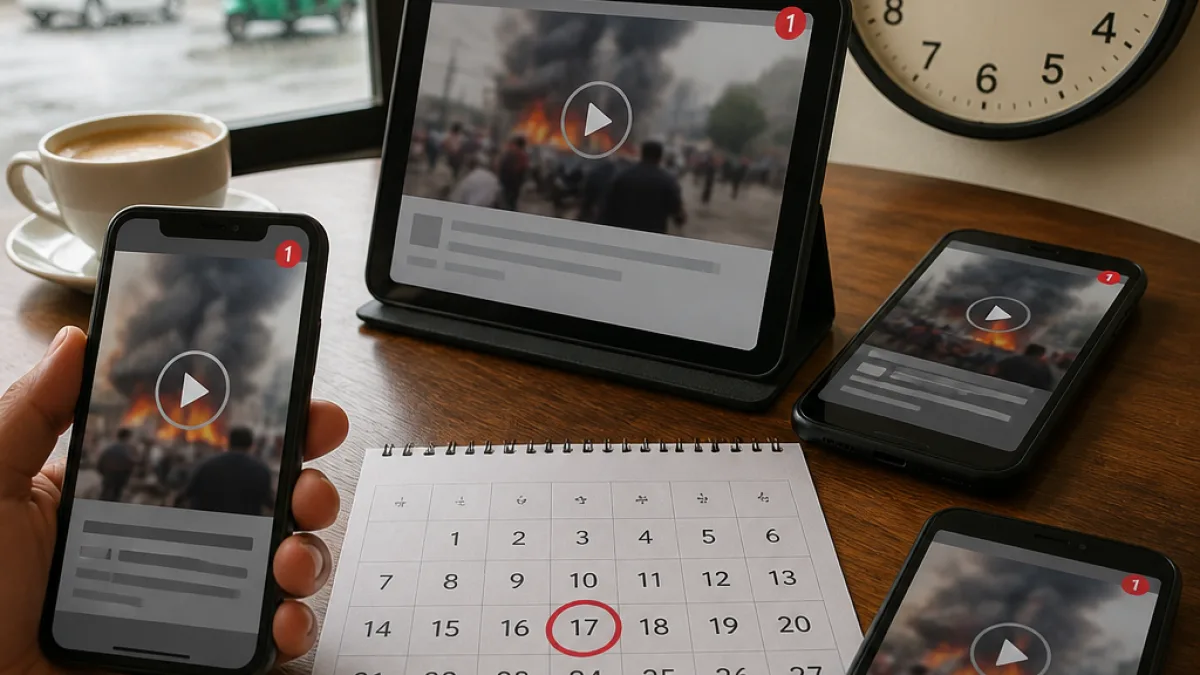
Social media platforms are repeatedly showing users old, anxiety‑inducing videos as if they were new, according to a Haaretz digital investigation. The study examined tens of thousands of posts and videos and found numerous cases where recommendation algorithms re‑served archived footage—frequently without visible timestamps—producing the impression that an event was unfolding in real time.
What the investigation found
Haaretz followed six fictional digital personas and monitored the accounts they viewed on Facebook, Instagram and TikTok. The examination identified hundreds of instances in which the same videos—especially clips of wartime announcements and emergency briefings—were pushed back into users’ feeds days, weeks or even months after they first circulated. Without clear date indicators, viewers can reasonably mistake those reruns for current developments.
One prominent example cited in the report involved a filmed announcement by an Israel Defence Forces (IDF) spokesman. The statement was originally released after an attack and was later encountered multiple times by different Haaretz test accounts. The announcement included the line that the IDF spokesman said immediately after the incident:
“A short while ago, the Iranian terror regime launched missiles toward the territory of the State of Israel.” — IDF spokesman, as quoted by Haaretz
Haaretz reports that that same clip reappeared across platforms for different users over a period of weeks. The platforms’ recommendation systems treated repeated engagement signals—likes, shares, watch time—as justification to re‑surface the content, rather than prioritising temporal context.
Why this matters to users and platforms
Algorithms that prioritise engagement over chronology can unintentionally amplify old but emotive content, blurring the line between current and historical information. This carries risks for public understanding during crises: repeated exposure to archived emergency footage can cause unnecessary alarm, distort public perception and complicate journalists’ and authorities’ efforts to communicate verified updates.
- Loss of temporal context: Date labels and publication timestamps are often hidden or deemphasised on short‑form video feeds, making it hard to tell when a clip was first posted.
- Algorithmic recycling: Recommendation engines may resurface historic posts if they predict high engagement, regardless of relevance to the present moment.
- Potential for panic: Replayed emergency announcements and war footage can spur confusion and anxiety among users who assume the footage is current.
Haaretz’s methodology—creating multiple test accounts and analysing repeated exposures—highlights structural behaviours in social apps rather than isolated moderation failures. The investigation frames the issue as a systemic effect of how platforms weigh user interactions when curating feeds.
Platform responses and implications
The findings nonetheless underscore wider debates about content labelling, visible timestamps, and whether platforms should alter recommendation weightings during crises to favour recent, verified updates from authoritative sources.
For users, the report reinforces the need to check timestamps and source accounts before treating social clips as current news. For platforms and regulators, it raises questions about whether design changes—such as clearer date displays, stronger weighting for publisher recency, or crisis‑aware ranking adjustments—should be required to reduce the risk of recycled panic content being mistaken for live events.