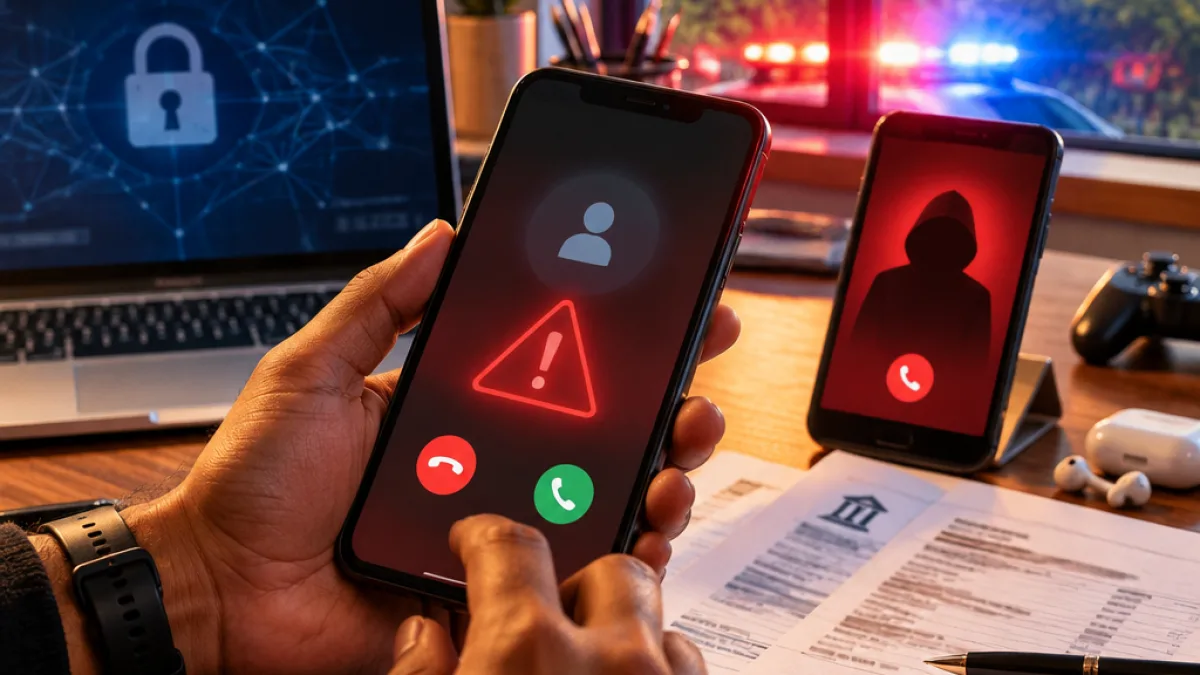
An elderly couple from Tadepalli in Andhra Pradesh’s Guntur district allegedly lost ₹2.01 crore after cybercriminals posing as law enforcement officials subjected them to a digital arrest scam. The callers reportedly claimed that a criminal case had been registered against the couple in Bengaluru and used the threat of legal action to pressure them into transferring money.
The incident is being investigated by Guntur district cybercrime officials. The couple approached the police after realising that the calls and demands were fraudulent. Investigators are working to trace the people behind the operation and identify the bank accounts that allegedly received the funds.
How the alleged fraud unfolded
According to the reported details, the callers told the couple that their involvement in a criminal case had come to light. They allegedly presented themselves as officials and warned the victims of serious consequences if they did not comply with their instructions.
The fraudsters reportedly kept the couple on prolonged phone conversations. This appears to have been used to create fear and panic while preventing the victims from independently checking the claims or seeking help. Believing the threats to be genuine, the couple transferred ₹2.01 crore to bank accounts specified by the callers.
- The victims were an elderly couple from Tadepalli in Guntur district.
- The callers allegedly impersonated law enforcement officials.
- The claimed case was said to have been registered in Bengaluru.
- Guntur district cybercrime officials are tracing the suspected fraudsters and recipient accounts.
Why digital arrest scams remain dangerous
In this type of fraud, criminals use the authority associated with the police or other government agencies to make victims believe that they are facing an immediate legal crisis. The demand for money is then presented as a way to avoid arrest, prove innocence or comply with an alleged investigation. The term “digital arrest” refers to the victim being kept under continuous monitoring or on video and phone calls, rather than being physically detained.
The Tadepalli case shows the financial impact such operations can have on older people. Once money is moved across multiple bank accounts, recovering it can become difficult. The investigation into the accounts used in this case may help establish how the funds were routed and identify other people involved in the alleged operation.
Investigation is under way
Guntur district cybercrime officials are examining the complaint and attempting to identify the callers, the bank accounts used to receive the transfers and the wider network behind the fraud. The reported loss is an allegation under investigation, and the identities of the suspected criminals have not been established in the details available.
The case also reinforces the importance of treating unsolicited calls involving criminal allegations and demands for money with caution. A caller’s claim to represent the police or another authority does not, by itself, establish that the call is genuine. The couple contacted the police after discovering the deception, while officials continue efforts to trace the alleged perpetrators and the transferred funds.