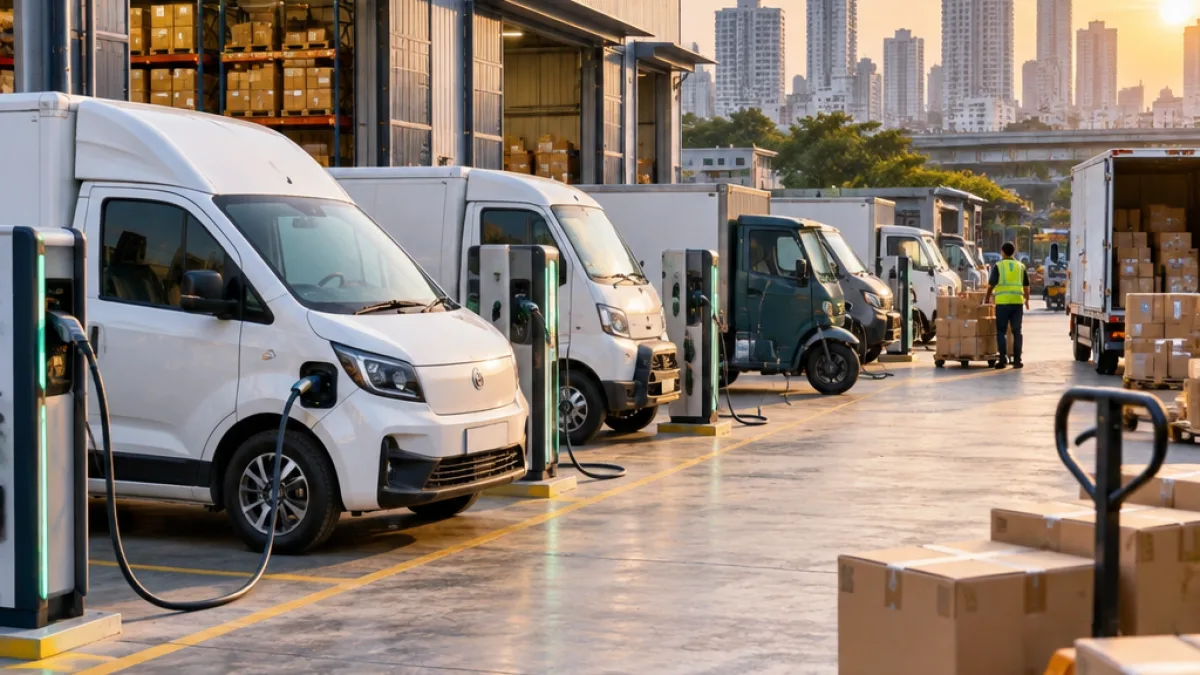
Delhivery plans to add between 1,500 and 2,000 electric commercial vehicles to its intra-city logistics operations over the next 12-18 months. The rollout, announced on 13 November 2026, will begin in Delhi-NCR and involve partnerships with Tata Motors, Euler Motors and Montra Electric.
The logistics company said the first phase would concentrate on urban delivery vehicles, with larger electric vehicles to be introduced later for routes that require higher payload capacity. The plan is aimed at operations covering less than 200 km a day, a distance range where Delhivery said electric vehicles are increasingly competing with diesel models on total cost of ownership.
Initial deployment will cover several vehicle categories
Tata Motors will supply the Tata Intra EV for the programme. Euler Motors’ Turbo City Plus will be among the first vehicles used for smaller commercial applications, while the arrangement with Montra Electric will support wider deployment of its EVIATOR electric commercial vehicle. Delhivery said the Montra vehicle is already operating within its network.
| Part of the plan | Details |
|---|---|
| Near-term deployment | 1,500-2,000 electric commercial vehicles |
| Deployment period | 12-18 months |
| First location | Delhi-NCR |
| Three-year target | Close to 5,000 electric commercial vehicles |
| Target operating distance | Less than 200 km per day |
Electric vehicles currently make up approximately 12-13 per cent of Delhivery’s eligible intra-city fleet. The company wants to raise that proportion to more than 50 per cent within two to three years. It also plans to fully electrify its intra-city operations, covering daily routes below 200 km, within four to five years.
“Scaling fleet electrification means finding solutions that work across the diverse needs of our network without compromising operational efficiency. Partnering with Tata Motors, Euler Motors and Montra Electric lets us expand our electric fleet across vehicle categories,” said Prashant Gazipur, Chief Operating Officer, In City Operations, Delhivery.
Delhivery’s stated approach separates the transition into stages rather than relying on a single type of vehicle. Smaller electric commercial vehicles will be used for city deliveries first, while vehicles with greater carrying capacity are expected to join the fleet subsequently. For Indian EV makers, the arrangement places their commercial products in a logistics network that operates across multiple urban delivery requirements.
What the plan means for urban deliveries
The initial focus on shorter intra-city routes is significant because commercial delivery fleets follow predictable daily patterns. Delhivery’s plan links vehicle selection to the distance and payload requirements of each operation, while the company’s targets indicate a gradual increase in the proportion of electric vehicles rather than an immediate fleet-wide change.
- The first phase will start in Delhi-NCR.
- Tata Motors, Euler Motors and Montra Electric are participating in the deployment.
- Delhivery aims to reach close to 5,000 electric commercial vehicles in three years.
The announcement does not provide vehicle purchase prices, charging infrastructure details or a city-by-city schedule beyond the initial Delhi-NCR rollout. It does, however, set out a clear operating boundary for the transition: intra-city logistics journeys below 200 km per day. That makes the programme relevant to the growing use of electric commercial vehicles for last-mile and urban delivery work in India.