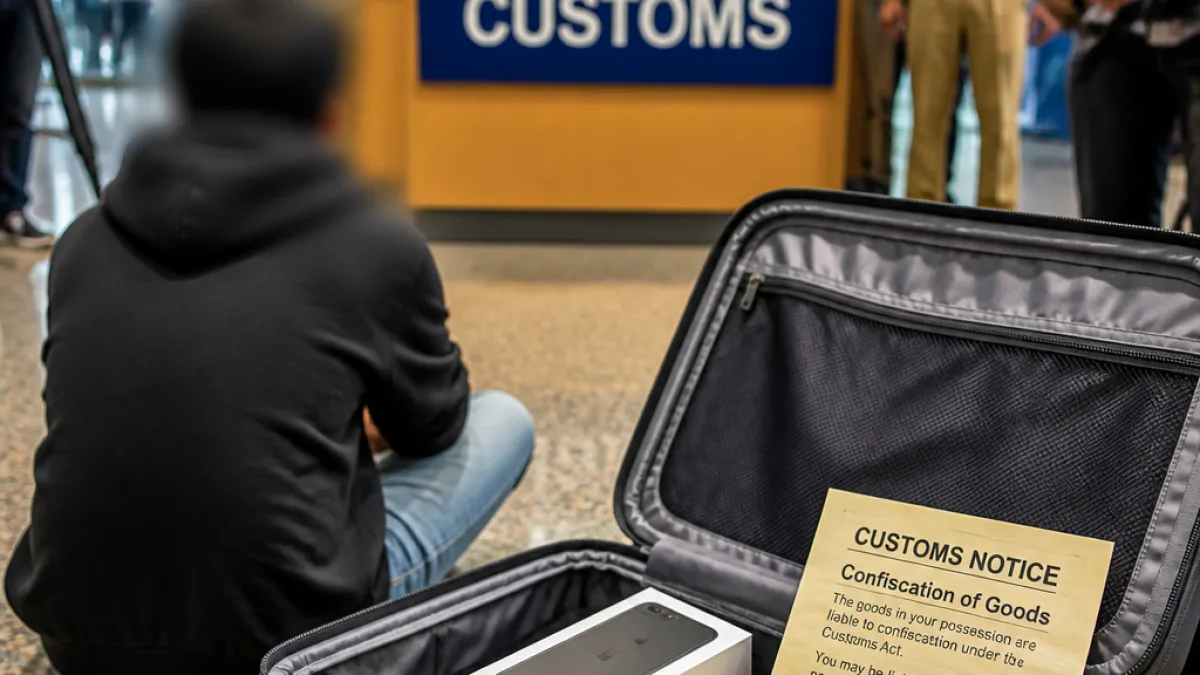
A public confrontation at Cochin International Airport (Nedumbassery) has highlighted uncertainty about whether travellers can bring a newly purchased smartphone into India without paying customs duty. According to media reports, a man identified as Ajas Muhamad, a native of Kozhikode, staged a sit‑in protest after Customs officials asked him to pay tax on a new iPhone 18 Pro he had brought from overseas.
What happened at Nedumbassery
The episode ended with a police case being registered, the reports say: Nedumbassery police registered a case against Ajas for allegedly obstructing Customs officials from carrying out their duties. Customs officers told the traveller that the exemption for personal effects applies to items that have been used personally for a period of time, and they noted that Ajas already owned another iPhone that he used personally. The newly arrived device was described in the coverage as brand‑new and unregistered.
What India’s baggage rules say
India’s Baggage Rules 2026, which came into effect on 2 February 2026, do not create a separate duty‑free allowance specifically for mobile phones. The rules continue to treat used personal effects differently from new goods. The reporting points out that a new phone bought abroad may not qualify automatically as duty‑free simply because a traveller says it is for personal use.
- General duty‑free allowance: Under the Baggage Rules 2026, eligible travellers can bring goods worth up to ₹75,000 under the general duty‑free allowance, subject to the rules.
- Used personal effects: Items already used personally are generally treated as eligible for duty‑free entry, subject to Customs assessment.
- New or additional phones: A brand‑new device may be treated differently and Customs can require proof of purchase, use, registration or levy duty depending on circumstances.
What this means for travellers to India
The incident illustrates how Customs officers may examine the circumstances around a phone’s arrival rather than accept a traveller’s declaration at face value. The available reporting emphasises two practical points for people bringing devices into India:
- Carrying a brand‑new, unregistered phone could prompt Customs to treat it as dutiable rather than as a used personal effect.
- Having an existing personal device of the same type may influence an officer’s assessment of whether an additional item is for personal use.
Whether duty applies is decided under the Customs provisions and depends on the specific facts of each case and the judgement of the officers at the point of entry. The reports make clear that simply asserting a phone is for personal use does not guarantee exemption under the Baggage Rules 2026.
| Rule or fact | As reported |
|---|---|
| Baggage Rules effective date | 2 February 2026 |
| General duty‑free allowance | ₹75,000 |
| Device in the incident | iPhone 18 Pro (brand‑new, unregistered) |
| Traveller named | Ajas Muhamad (Kozhikode native) |
Customs officers quoted in the reporting said exemptions apply to phones that have been used personally for a period of time; they also noted the traveller already owned another iPhone. The coverage does not quote a Customs press release or an official written order in this particular case, but records the actions taken and the rationale given by officers at the airport.
For travellers returning from abroad with expensive smartphones, the message in the reporting is straightforward: be prepared to explain the purchase, provide documentation if asked, and understand that a new or additional phone may be assessed as a dutiable import rather than a duty‑free personal effect under the Baggage Rules 2026.