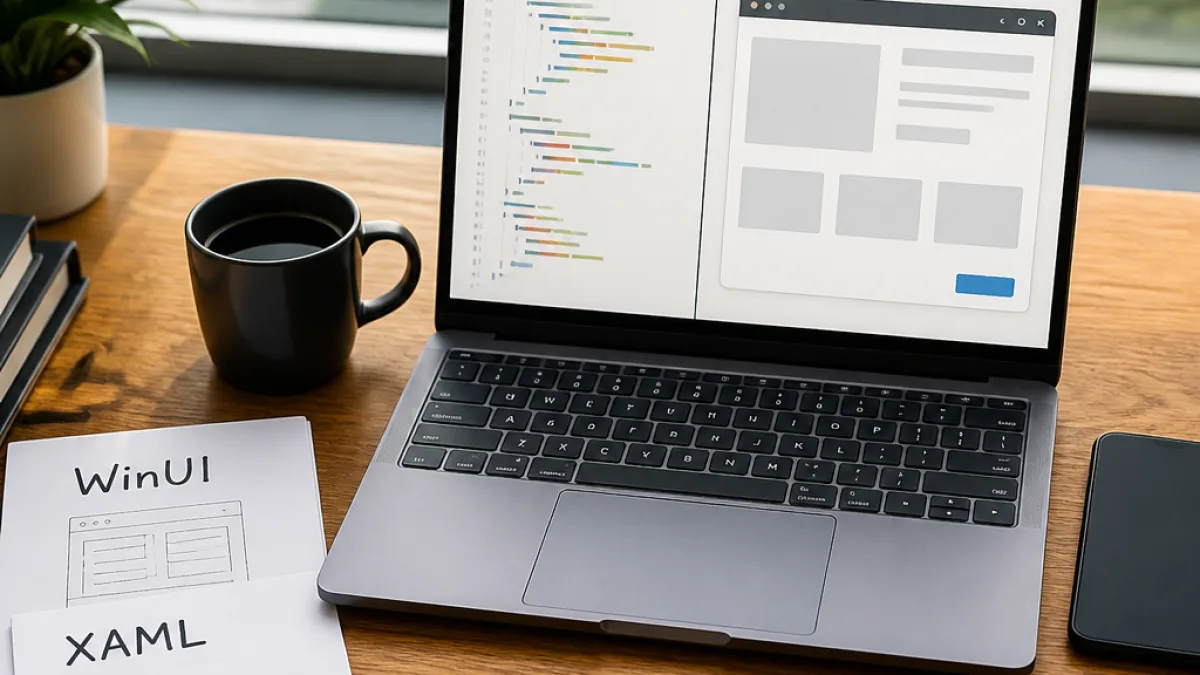
Microsoft has moved to reassure developers that WinUI and XAML are not being deprecated even as it experiments with a new, experimental framework called Microsoft.UI.Reactor. The clarification follows concern among developers that Reactor — which offers a way to define native Windows interfaces directly in C# rather than using XAML — could signal the end of the existing native app stack.
WinUI is Microsoft’s native UI framework that underpins many system apps on Windows 11. XAML is the markup language many developers use to describe app interfaces. Reactor builds on WinUI and presents an alternate method for authoring native UI, but Microsoft emphasised that WinUI remains “the foundation” and that XAML “is a first‑class way to use it, it isn’t being deprecated, and it’s still getting active investment,” Alexandre Zollinger Chohfi wrote in a developer blog post on 21 October.
Why developers are uneasy
The caution among developers is not without precedent. Microsoft has ended or reworked native Windows frameworks before: the company ceased support for Silverlight on 12 October 2021 and UWP (Universal Windows Platform) is widely regarded as being no longer under active development despite remaining supported in documentation. That history has made developers wary each time Microsoft introduces a new approach to building Windows applications.
Reactor’s appeal is that it lets developers describe native UI in C# directly, avoiding XAML markup. The experiment therefore raises questions about what a developer’s long‑term investment in XAML means. Microsoft’s public statement and the open‑source materials it pointed developers to are intended to address those concerns by framing Reactor as an additional option rather than a replacement.
- Microsoft’s position: WinUI stays the foundation; XAML remains first‑class and receives active investment (developer blog, 21 October).
- What Reactor does: offers a C#‑first way to describe native UI while building on WinUI (experimental project).
- Historical context: Silverlight reached end of support on 12 October 2021; UWP is still documented as supported but “no longer under active development.”
Consequences for developers and organisations
For development teams and organisations that maintain Windows desktop applications — including those in India’s large software services and product companies — the clarification matters in planning technology roadmaps and training. Teams using XAML and WinUI now have an official statement that their existing investments remain supported and that Microsoft is continuing to invest in XAML. At the same time, Reactor may attract new projects or experimentation from teams favouring a C#‑centric workflow.
| Item | What it means |
|---|---|
| WinUI | Remains the foundation for native Windows UI |
| XAML | Confirmed as a first‑class way to use WinUI and still receiving active investment |
| Microsoft.UI.Reactor | Experimental framework allowing UI to be described in C#, builds on WinUI |
| Silverlight | Reached end of support on 12 October 2021 (historical context) |
Microsoft’s blog post and the open‑source materials it linked to are the company’s current public guidance for developers evaluating Reactor. The company redirected questions to those resources when asked, signalling that Reactor is intended as a developer experiment rather than an immediate platform shift.
For technology teams, the immediate takeaway is pragmatic: existing WinUI/XAML projects remain supported by Microsoft’s stated position, while Reactor represents another choice for new work or for teams willing to prototype alternate authoring models on top of WinUI.
“WinUI is the foundation. XAML is a first‑class way to use it, it isn’t being deprecated, and it’s still getting active investment,” Alexandre Zollinger Chohfi wrote in a developer blog post on 21 October.
That combination — continued investment in XAML plus an experimental C#‑first option — leaves room for multiple approaches to native Windows app development rather than a single, forced migration path.