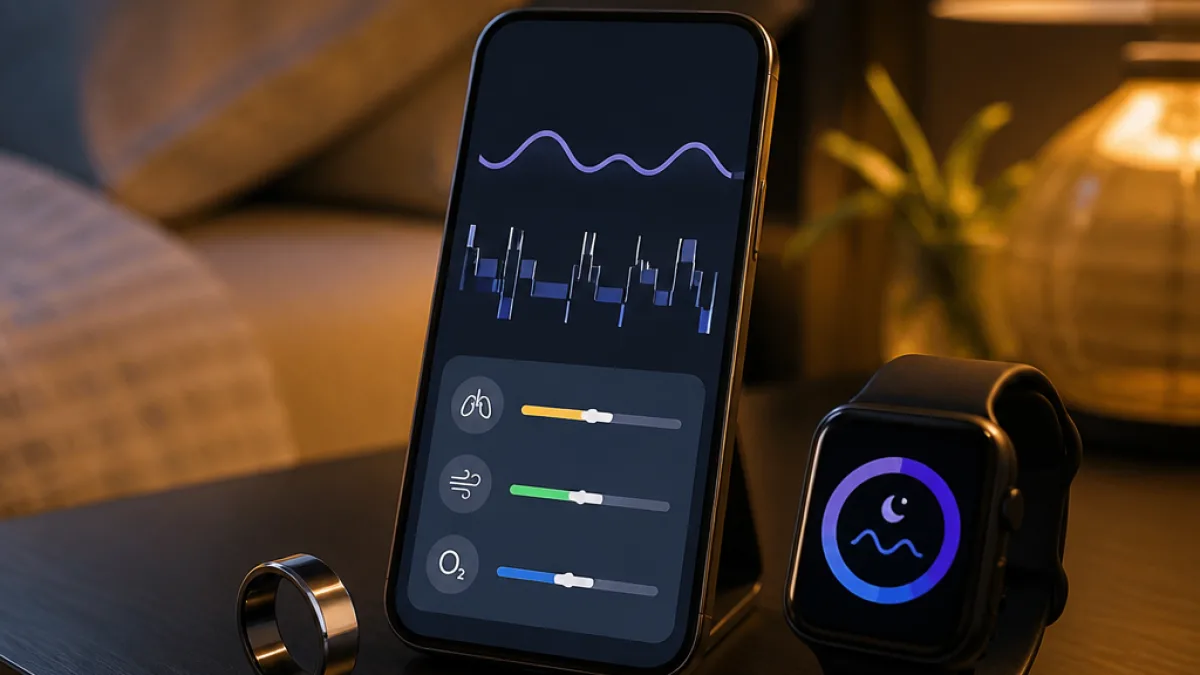
Samsung is expanding the sleep-apnoea capabilities of some Galaxy wearables with an updated feature that measures breathing disturbances during sleep and places them into three categories. The function has received clearance from the US Food and Drug Administration (FDA) and South Korea’s Ministry of Food and Drug Safety (MFDS).
The first rollout is scheduled for November 2026 in South Korea. Samsung will initially bring the feature to the Galaxy Watch Ultra 2, Galaxy Watch 9 and Galaxy Ring. The company has not provided details about availability outside South Korea, so an India rollout has not been confirmed.
What the updated feature measures
Existing sleep-apnoea detection on Samsung wearables identifies signs associated with the condition. The revised system is intended to provide a more detailed view by examining how many breathing disturbances occur during each hour of sleep. An AI algorithm then assigns the recorded pattern to one of three levels:
- Mild
- Occasional
- Frequent
This means compatible Galaxy devices will move beyond a simple indication of possible sleep-apnoea signs and show the frequency level of breathing disturbances recorded overnight. For users in India, the practical impact will depend on whether Samsung obtains or extends the necessary regulatory clearances and enables the function locally.
Older Galaxy wearables are also included
Samsung’s sleep-apnoea detection is not limited to its newest hardware. Galaxy Watches as old as the Galaxy Watch 4 already support detection of signs linked to sleep apnoea. The company also says the enhanced function will reach older devices, including the Galaxy Watch 8 and Galaxy Watch 7, through future software updates.
| Device group | Availability stated by Samsung |
|---|---|
| Galaxy Watch Ultra 2, Galaxy Watch 9 and Galaxy Ring | Rollout begins in South Korea in November 2026 |
| Galaxy Watch 8 and Galaxy Watch 7 | Planned through future software updates |
| Other markets, including India | No availability details announced |
The Galaxy Ring’s inclusion is notable because Samsung’s ring became the first FDA-cleared ring device for sleep-apnoea detection earlier in 2026, according to Android Authority. The new feature extends the same broader health-tracking direction by presenting the frequency of sleep-related breathing disturbances rather than only flagging possible symptoms.
Sleep-apnoea detection has also been available on Galaxy Watches for several generations, including the Galaxy Watch 4. However, the improved classification will require a compatible device and the relevant software update. Until Samsung confirms support for India, Galaxy Watch and Galaxy Ring users in the country should not assume that the new three-level analysis will appear on their devices.