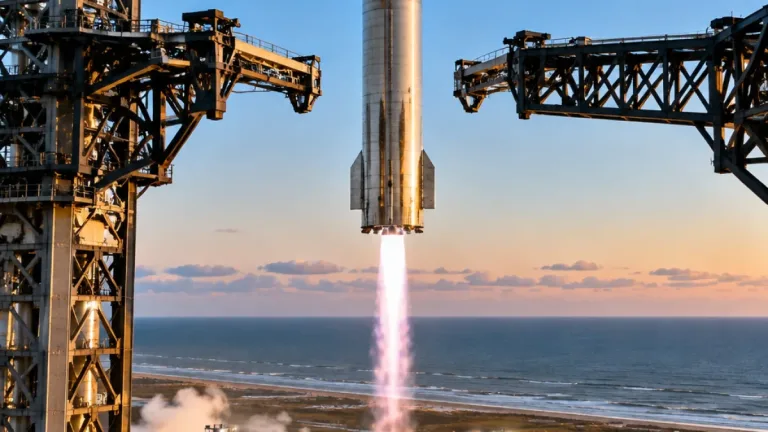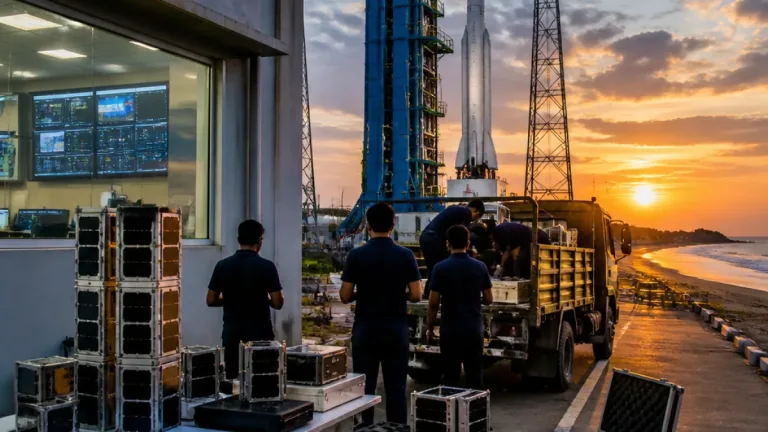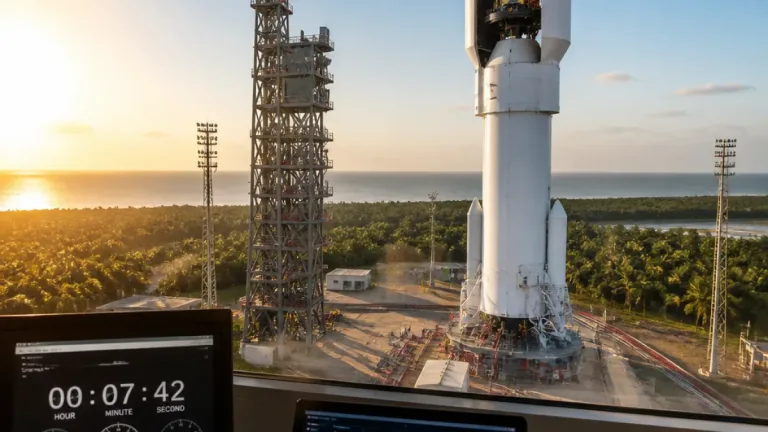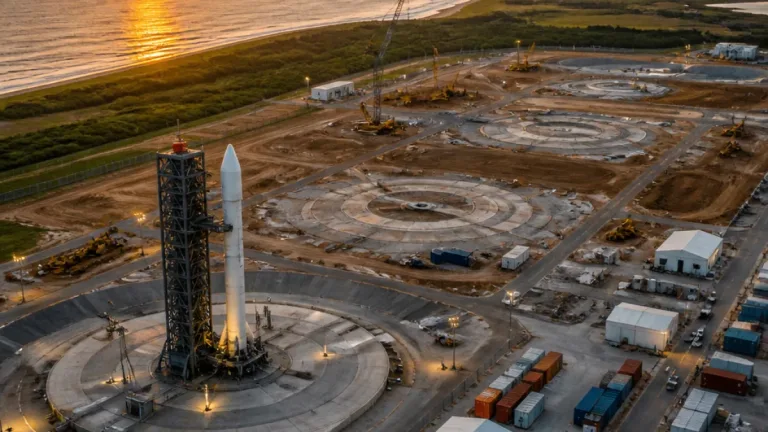
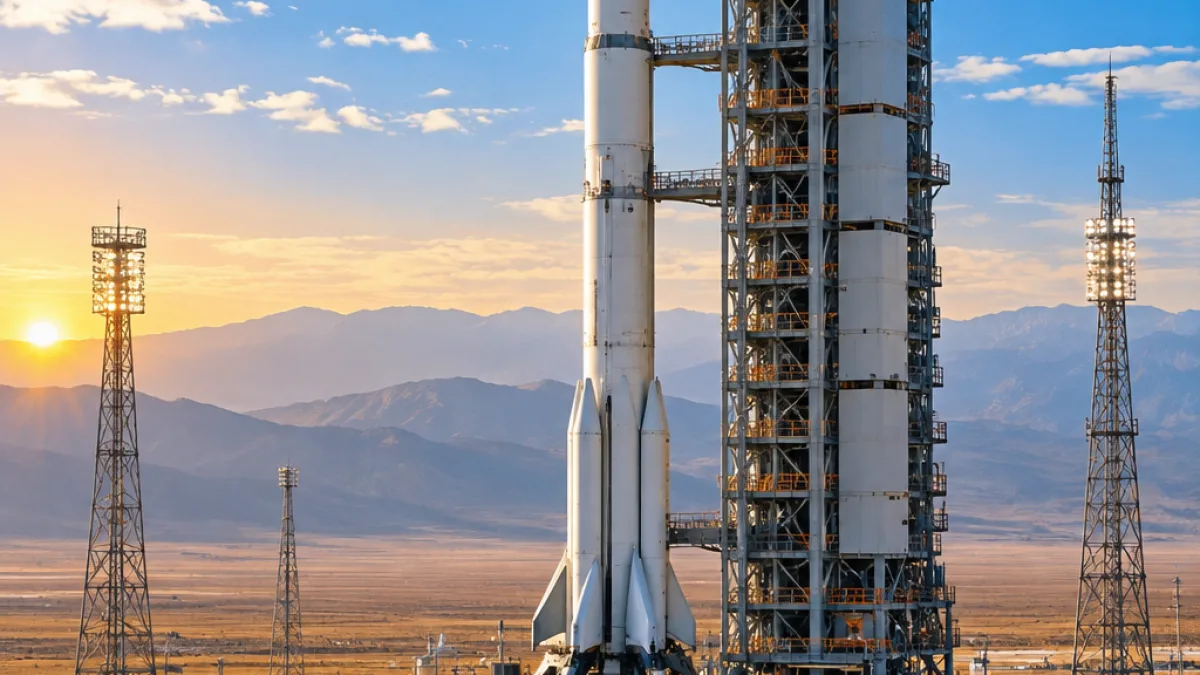
China has moved the Shenzhou-24 crewed spacecraft and its Long March-2F carrier rocket to the launch area at the Jiuquan Satellite Launch Center in northwest China. The transfer took place on 17 November 2026, according to the China Manned Space Agency, which said the mission would lift off at an appropriate time in the near future.
The rollout is a significant step in the preparation of China’s next crewed spaceflight. The mission will be the first in the country’s manned space programme to include both Chinese and foreign astronauts on a joint flight. A Pakistani astronaut will take part as a payload specialist, although the agency has not provided a launch time in the announcement.
What the rollout means for the mission
Moving the spacecraft-and-rocket combination to the launch area indicates that ground preparations have advanced to the stage before final launch operations. The Long March-2F is the crew-rated launcher assigned to the Shenzhou-24 mission, while Shenzhou-24 is the crewed spacecraft that will carry the astronauts for the flight.
The China Manned Space Agency has not announced an exact date or time for liftoff. Its wording places the launch in the near future, but the mission remains subject to the completion of checks and other preparations at Jiuquan. Until an official launch schedule is issued, the rollout should not be treated as confirmation of a specific liftoff window.
- Mission: Shenzhou-24 crewed spacecraft
- Rocket: Long March-2F
- Launch site: Jiuquan Satellite Launch Center, northwest China
- International participation: A Pakistani astronaut will fly as a payload specialist
A first for China’s crewed programme
The planned participation of the Pakistani astronaut gives Shenzhou-24 significance beyond a routine crew rotation or domestic spaceflight. China’s agency describes it as the first mission in the country’s manned space programme involving Chinese and foreign astronauts on the same flight. The arrangement also places Pakistan’s human-spaceflight participation within a Chinese-led crewed mission, although details about the astronaut’s identity and assigned activities have not been provided.
For readers in India, the mission is notable as a development in the wider Asian space sector, where crewed-flight capability and international astronaut cooperation are expanding. China’s decision to include a foreign payload specialist shows how its crewed programme is being used for cooperation beyond its own astronaut corps. The announcement, however, does not disclose the scientific payloads, experiments or specific duties planned for the Pakistani astronaut.
The next formal milestone will be the launch announcement from the China Manned Space Agency. Until then, the transfer of the Shenzhou-24 and Long March-2F combination to the launch area confirms that the mission has entered an advanced stage of preparation, while the precise launch schedule remains pending.