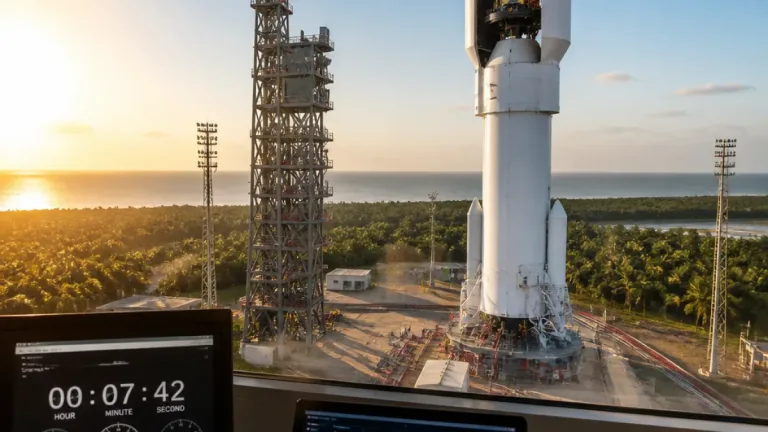
India aims to expand its launch infrastructure to four operational pads by 2029, ISRO chairman V Narayanan said while speaking in Chennai. The target includes a third launch pad at Sriharikota and a new launch complex for the Small Satellite Launch Vehicle (SSLV) at Kulasekarapattinam, signalling a push to increase launch frequency and to involve private companies in mission operations.
What the new capacity means
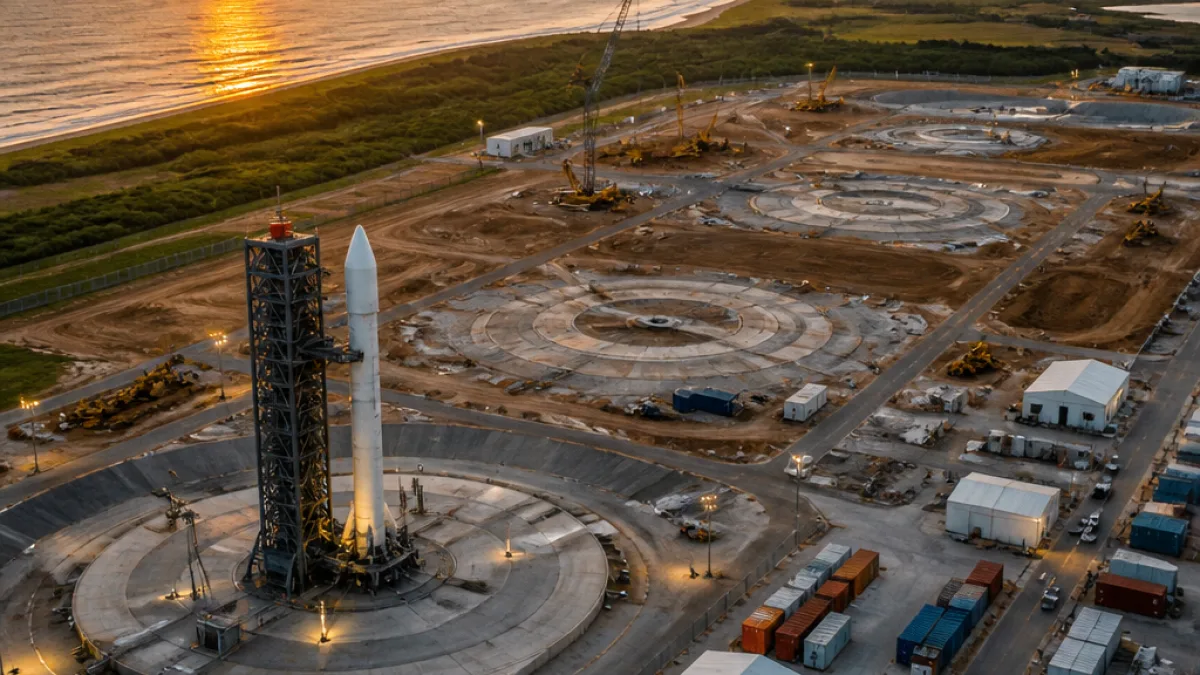
Narayanan framed the expansion as more than extra pads: it is part of a shift towards a broader ecosystem in which private firms take on roles in launches, satellite operations and the support services that surround spaceports. The Kulasekarapattinam complex is being developed on 2,000 acres and is described as a full launch complex, not just a pad — with vehicle integration and stage-preparation buildings, rail-track systems, range, telemetry and telecommand systems, safety and firefighting facilities, and civic amenities.
“The first rocket launch from the complex is expected next year,” Narayanan said.
The chairman linked the capacity expansion to a practical need: an increase in the number of satellites that will have to be placed in orbit, which in turn requires more organisations able to operate launch systems and the industrial infrastructure around them.
Infrastructure elements listed for Kulasekarapattinam
- Area: 2,000 acres allocated for the Small Satellite Launch Vehicle launch complex
- Facilities planned: stage-preparation and vehicle-integration buildings, launch pad, rail-track systems
- Support systems: range systems, checkout, telemetry and telecommand systems, safety and firefighting facilities, civic amenities
By describing the launch complex in these terms, ISRO emphasised that a spaceport requires coordinated industrial and safety systems — specialised buildings, testing infrastructure, communications, emergency response and basic services — and not merely a rocket pad.
| site | role | timeline mentioned |
|---|---|---|
| Sriharikota | existing launch centre; a third pad planned | part of four pads operational by 2029 |
| Kulasekarapattinam | SSLV launch complex for small satellites | first rocket launch expected next year |
ISRO’s timetable and the stated facility list underscore the agency’s intention to support a higher cadence of missions. The narrative in Chennai also emphasised private-sector participation: Narayanan argued that with an expected need to launch thousands of satellites, Indian start-ups and private companies must be able to operate launch systems and supply the surrounding services.
Taken together, these developments matter for satellite makers, launch-service providers, suppliers of ground systems and infrastructure firms in India. The SSLV complex’s design as a comprehensive launch site points to new opportunities for systems integration, range support and operations work that private actors can offer as the national programme scales up.
ISRO’s announcement places launch infrastructure front and centre of the country’s next phase of space activity, linking physical capacity to broader ambitions for increased launch frequency and a more diverse set of organisations participating in missions.