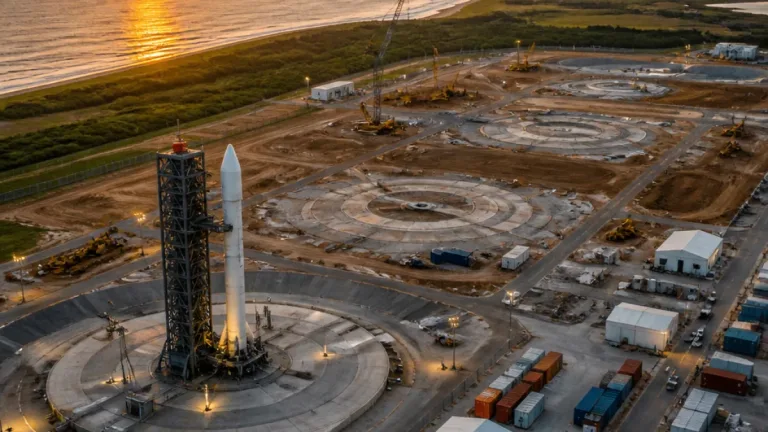
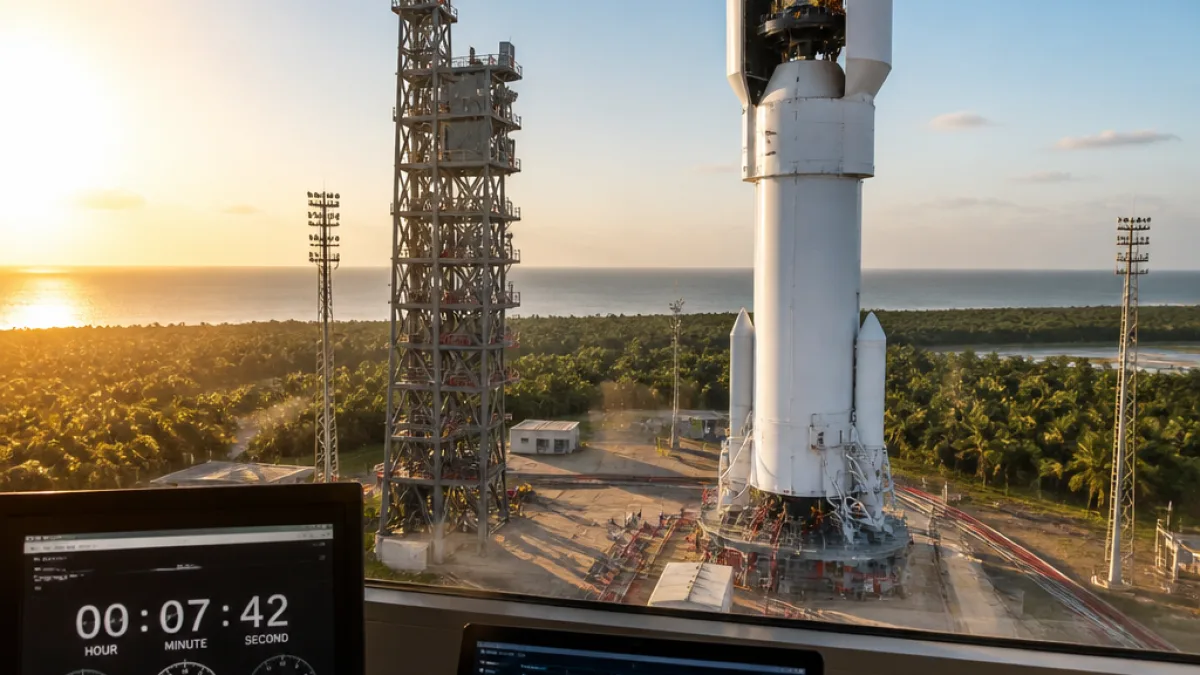
The Indian Space Research Organisation (ISRO) is scheduled to launch the navigation satellite NVS-03 on 30 October 2026 using a GSLV Mk II rocket from the Satish Dhawan Space Centre at Sriharikota. NVS-03 is the third spacecraft in ISRO’s second‑generation NavIC family and is designed to address reliability shortfalls in the first‑generation constellation and restore independent positioning capability for India.
What NVS-03 carries and why it matters
NVS-03 includes several features ISRO describes as critical for national navigation sovereignty. The satellite uses an I-2K platform, has an approximate mass of 2,232 kg and a design life of about 12 years. It transmits tri‑band navigation signals — L1, L5 and S‑band — to improve compatibility with consumer devices such as smartphones, smartwatches and IoT modules while meeting both civilian and strategic needs.
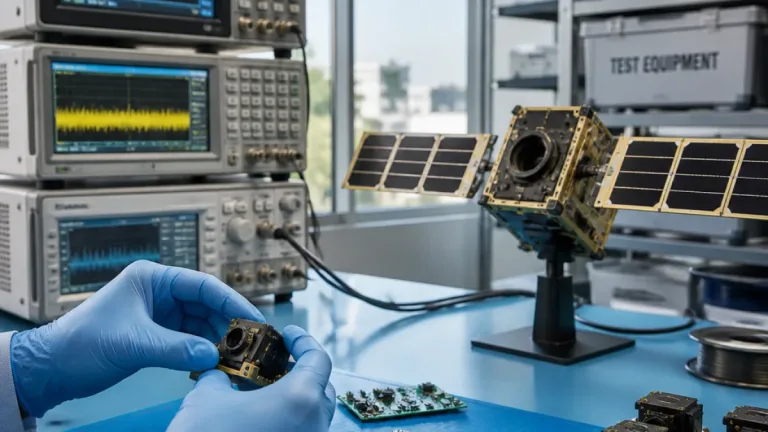
A key change in the second‑generation NavIC spacecraft is the use of indigenous rubidium atomic clocks, developed by the Space Applications Centre (SAC), Ahmedabad. Earlier NavIC satellites suffered multiple failures related to imported rubidium clocks, and NVS-03 aims to reduce dependence on foreign components and improve on‑orbit timing reliability.
The constellation problem and the aim of this launch
By early 2026, ISRO reported that only three NavIC satellites were operational, below the threshold needed for independent three‑dimensional positioning. Restoring at least four functioning satellites is necessary for standalone 3D navigation over India and roughly 1,500 km beyond its borders—the original service area defined for NavIC.
NVS-03’s successful insertion and commissioning would therefore be the crucial step toward recovering NavIC’s claimed standalone capability and expanding signal availability to consumer devices. The programme organisations named in ISRO’s documentation include the Space Applications Centre (SAC) for navigation payloads and the U.R. Rao Satellite Centre (URSC), Bengaluru, for satellite construction.
- Launch vehicle: GSLV Mk II
- Launch site: Satish Dhawan Space Centre, Sriharikota
- Launch date: 30 October 2026
- Satellite platform: I-2K; mass ~2,232 kg; design life ~12 years
- Navigation bands: L1, L5 and S
- Notable payload: indigenous rubidium atomic clocks (SAC)
Restoring NavIC’s independent operational status has practical implications for device manufacturers, navigation service providers and defence users in India. Tri‑band signals increase the chance that future smartphones and IoT devices will include native NavIC support, reducing sole reliance on other global positioning systems. The inclusion of domestically developed atomic clocks is also intended to improve long‑term reliability of timekeeping on board the satellites.
| Item | Detail |
|---|---|
| Satellite | NVS-03 (third second‑generation NavIC satellite) |
| Launch vehicle | GSLV Mk II |
| Launch site & date | Sriharikota, 30 October 2026 |
| Mass / life | ~2,232 kg / ~12 years |
| Signal bands | L1, L5, S |
| Clock | Indigenous rubidium atomic clocks (SAC) |
ISRO has characterised the G1 uncrewed Gaganyaan mission as the next immediate milestone for India’s human spaceflight programme; NVS-03 sits in a different track of national priorities: navigation sovereignty. Both efforts underline the agency’s dual focus on strategic autonomy and expanding services for civilian users.
If NVS-03 reaches its planned orbit and completes in‑orbit checks, NavIC should regain the minimum satellite count required for independent 3D positioning, a development that will affect device makers, telecom players and end users who depend on precise location services inside India.